
attendo Projects
Your projects, with the margin in plain view
Scheduling with a Gantt chart and baseline, each person’s workload, and hours and costs logged as the work happens. With documents, signatures and the customer on the same record as the project.
- Gantt with baseline and dependencies
- Workload based on actual hours
- Live shared whiteboards
If this sounds familiar, keep reading
The project is on track until someone looks at the numbers
The plan lives in a Gantt chart only one person updates. Hours arrive on timesheets at the end of the month. Drawings and minutes sit in a shared folder. And the customer asks how it is going by email.
By the time the costs finally add up, the project is over and the margin is whatever it turned out to be.
- Behind schedule
The plan and reality never meet
Dates slip, but nobody compares them with what was approved. The variance shows up at the closing meeting.
- Overbooked
Nobody knows who is free
Dates get promised without seeing anyone’s workload. Then three projects are waiting on the same person.
- Not logged
Hours come in late
They are logged from memory at month end, and the real cost is known when it is too late to fix anything.
- Not documented
Information is scattered
Drawings, minutes, photos and signatures in emails and folders. Anyone joining mid-project starts from scratch.
How it works
From budget to handover, in one place
Six steps. The project keeps its plan, its people, its cost and its documents from start to finish.
- Step 1
Create or import the project
By hand or from the budget, with its phases, line items and amounts. Each piece of work is a document with an owner.
- Step 2
Schedule it
Dates, estimated hours, dependencies and owners on the Gantt chart, with the team’s workload in view.
- Step 3
Set the baseline
You save a snapshot of the approved plan. From then on, every variance is measured against what was promised.
- Step 4
Run it through documents
Each person works on their tasks, checklist and report, and logs hours, expenses and materials from desktop or mobile.
- Step 5
Track progress and margin
Progress comes from closed documents and cost adds up live. Profitability, per project.
- Step 6
Hand over and maintain
The customer signs off on the handover. What you installed moves to maintenance with its assets and contract, on the same system.
Scheduling
A Gantt chart measured against what was promised
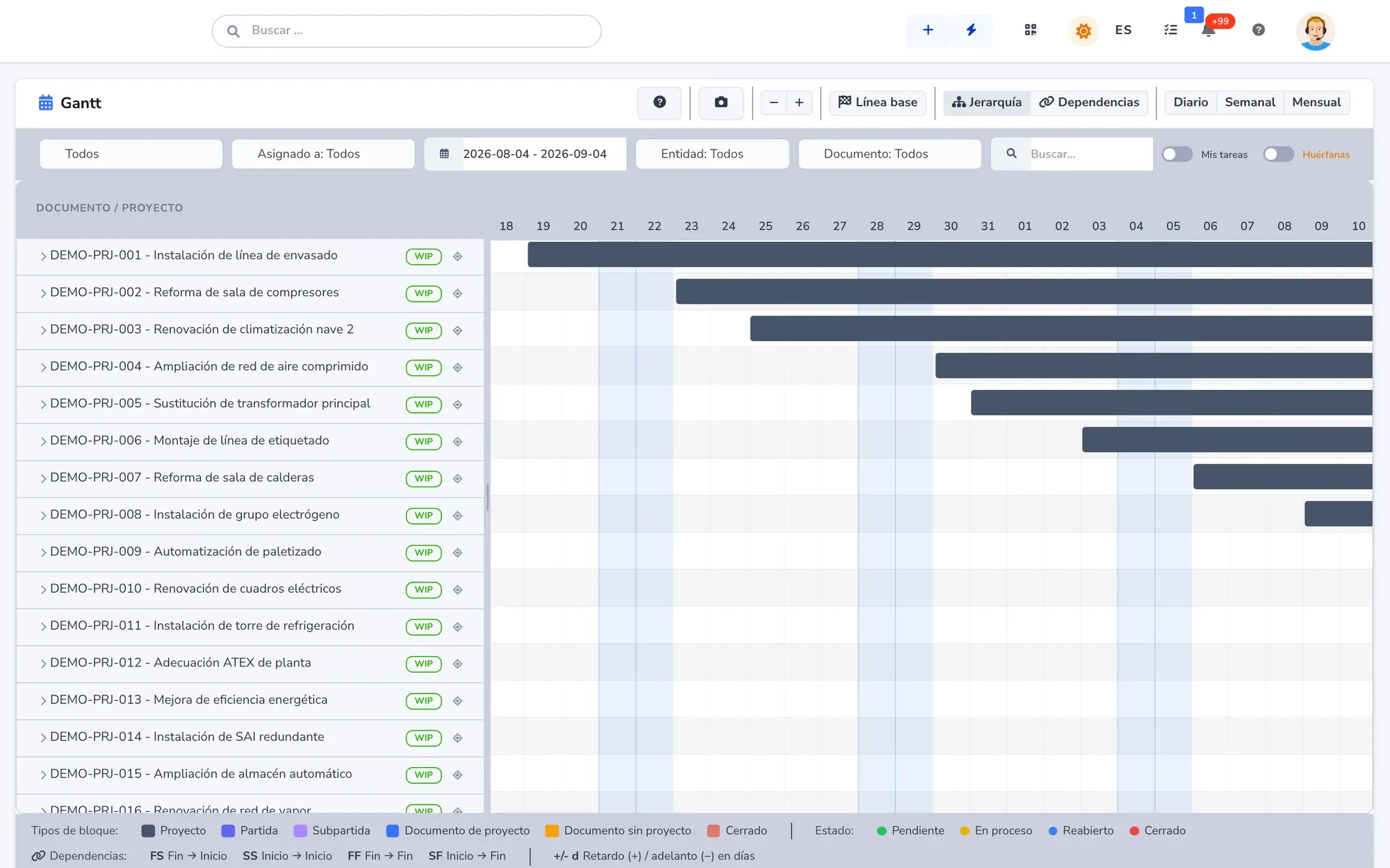
The project breaks down into phases, line items and documents, and every piece of work has an owner. Dependencies write down the sequence, and the baseline keeps the plan the customer approved.
When something moves, you see how far it has slipped before anyone asks.
- Project, phases, line items and sub-items in the same view
- Finish-to-start, start-to-start, finish-to-finish and start-to-finish dependencies, with lag or lead in days
- A baseline to compare planned with actual
- Day, week or month view, including documents outside any project
- Budget imported from BC3 files from Presto or Arquimedes
Workload
Who is overloaded, before you promise a date
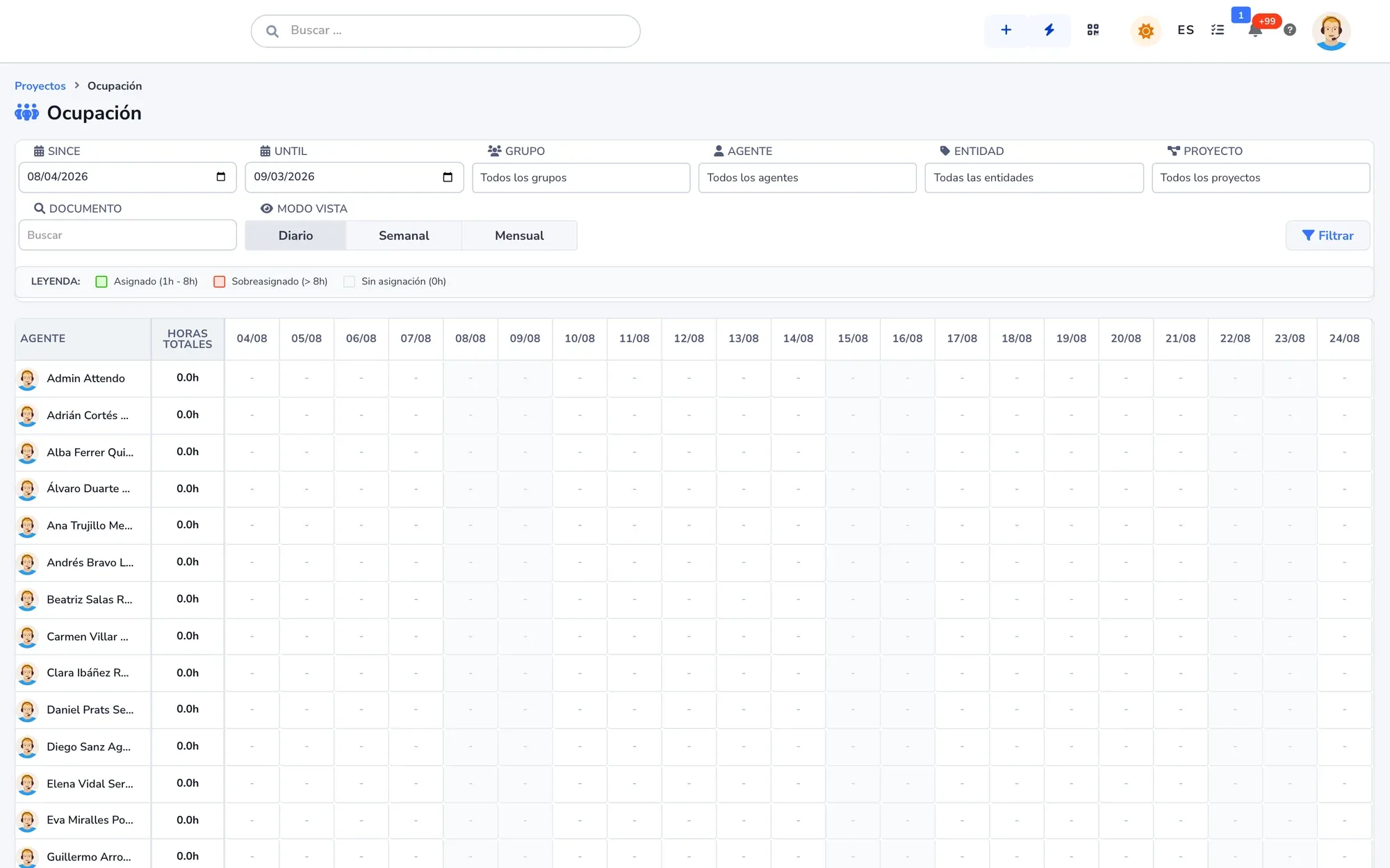
The workload report compares the planned hours on each document with each person’s working day. Before you take on another project, you know whether anyone is free, and who is juggling three at once.
- By day, week or month
- Filters by group, person, entity type, project and document
- Based on each person’s actual working hours, holidays and time off
- Assigned, overbooked and unassigned, at a glance
Hours and costs
The cost of the project, while the work happens
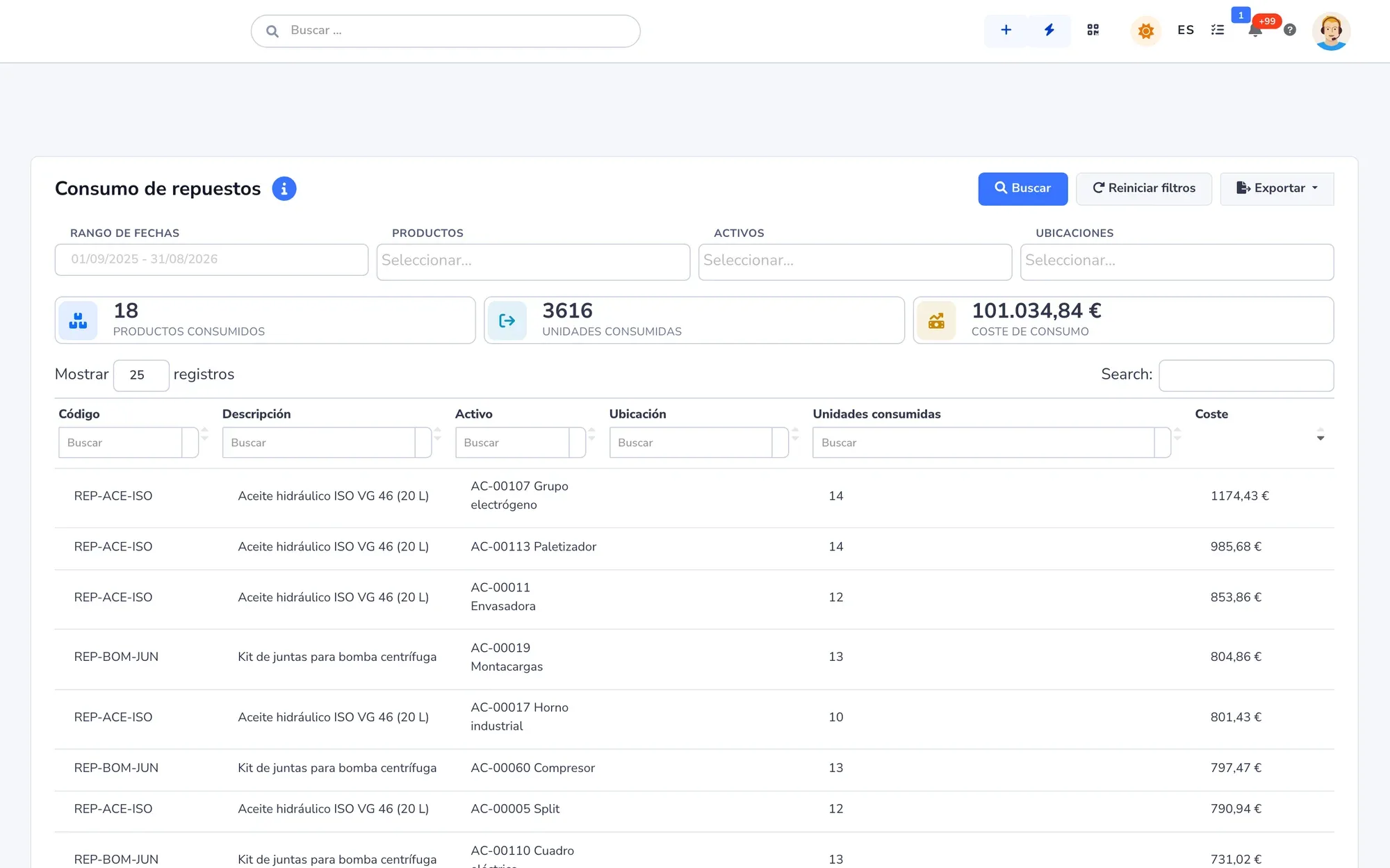
Each person logs time to the document they are working on, from desktop or the app. Expenses and materials add up on the same project, and the margin does not wait for month end.
attendo is not your ERP or your accounting system. It prepares what is billable, such as hours, materials, orders and delivery notes, and passes it to your connected ERP, which issues the invoice and handles tax filings.
- Time logged to each document, with who worked on it
- Hours at their rate, expenses and materials added up live
- Profitability per project, as per customer or per contract
- Attendance tracking with clock-ins and breaks with a reason, if you need it
- Billable items go to your ERP, which issues the invoice
- The attendo Projects home screen: late projects with traffic lights, hours, profitability and workload, with their reports and a dashboard you can edit
Multi-user whiteboards
A whiteboard to think the project through together
The kickoff meeting, the installation sketch or the division of work happen on a shared whiteboard. Everyone edits at once and sees where the others’ cursors are.
Whatever gets decided stays linked to the project’s documents. Nothing is left in a photo of the meeting room whiteboard.
- Charts, notes, annotations, drawings, images and rich text
- Headings, to-do lists and links to documents, people, customers, projects and groups
- Everyone’s cursor, live
- Who changed what, with history and named versions
- Or a canvas to draw on together over a photo or a floor plan
Kickoff · Bottling line
- Content
- Sketch, 14 notes and a to-do list
- Links
- 3 documents and 2 people
- Version
- “After the site visit”
- Last change
- Marta, 2 min ago
- Mon 9:30Whiteboard created at the kickoff meeting
- Mon 10:10Version saved: “After the site visit”
- Tue 4:05Marta links the revised drawing
Documents and signatures
Every drawing, set of minutes and signature, in its project
Drawings, minutes, photos and contracts hang from the project and the work they document. The timeline records who uploaded what and when.
The contract or handover report goes out for signature from its record, and the envelope list tells you who still has to sign.
- Attachments linked to the project and each piece of work, with malware scanning
- Tags and search across the whole server, closed items included
- Contracts and handover reports signed with attendo eSign
- Blockchain fingerprint of every signed document
- Project report with your branding
Customers and partners
Customers and subcontractors, without phone calls
Your customers see their own records in the portal and download what they signed. Your subcontractors get their jobs in the supplier portal and close them without entering your system.
The project’s conversations, by email, WhatsApp or meeting, stay on its timeline with their date and author.
- Customer portal with their records and what they signed, no license needed
- Supplier portal: each subcontractor accepts or declines their jobs, logs hours and materials and closes them
- Web tracking: a page where the customer follows the status of their order
- Email, WhatsApp and Teams or Meet meetings on the project timeline
- Teams
- Slack
- Meet
- Web chat
- Phone
One single record
WhatsApp “What time are you coming?”Teams Message from the supervisorCall Transcribed and summarizedCustomer and internal projects
A construction job, a rollout or an engagement
The same tool works for the project you sell to a customer and for your own: integrating a new system, opening a new site or migrating software. The phases change, the tool does not. And when the job is done, what you installed moves into maintenance with attendo CMMS.
Who it is for
The most common industries. And any other.
attendo Projects adapts to any industry and any company, in any country, with its own document types, fields and vocabulary, and no custom development. These are the most common ones, not the only ones.
Industries
Types of business
- Companies that sell projects or professional services
- Installers with projects, commissioning and after-sales
- Companies that sell to other businesses
- Organizations that maintain their own assets
marIA in your projects
What was agreed at the meeting, already summarized in the project
-
Summarizes meetings and voice notes
Teams or Meet meetings are recorded and transcribed on the project, and marIA summarizes what was agreed. The same goes for a voice note from someone on site.
-
Answers questions about your data
“Which projects are over their planned hours?” In plain language, read-only, and showing where the answer comes from.
-
Searches the documentation
It answers citing the specifications, drawings and procedures you have uploaded.
-
Drafts the reply
The reply to the customer, with the whole project history in view. A person reviews and sends it.
What it does not do: schedule, assign or move dates. Without AI, attendo Projects works in full.
Integrations
Connected to what you already use
attendo does not replace your ERP or your accounting. The connector with Odoo, SAP Business One, Business Central or Holded is native: the project’s billable items go to the ERP, which issues the invoice. With humaneo, also native, you round out people management, except payroll.
Meetings are booked in Teams or Meet from the record, the calendar syncs with Outlook, and API v4 and webhooks connect everything else. If another tool needs the data, it reads it through the API or MCP.
Honest comparison
Where it fits (and where it does not)
We would rather you know now than at the third meeting.
| If your priority is… | attendo Projects |
|---|---|
| Projects that end in installation, maintenance or support for the same customer | attendo ProjectsThis is its home turf: the project carries on in the same platform |
| Tracking hours, costs and workload for a team running several projects at once | attendo ProjectsA good fit |
| Software development with sprints, code issues and repositories | attendo ProjectsAn agile development tool is the better choice |
| Job costing and budget control for a large general contractor | attendo ProjectsYour construction ERP is the better choice. attendo can run the execution and pass it hours and materials |
By department: engineering and projects. By industry: construction and engineering, energy and renewables and consulting and professional services.
Compare attendo vs. Excel, calculate the return on attendo with your numbers and read what a technician hour really costs. In the glossary: customer profitability.
The rest of the platform
The rest of the platform, when you need it
Modules used by attendo Projects
Frequently asked questions
Frequently asked questions
Is it only for construction?
No. It works for any company that runs projects: an installation, a software rollout, a plant shutdown, a store opening or a consulting engagement. Phases and line items are one way to organize it, not a requirement.
Can I import the budget?
Yes, if your estimating software exports to BC3, as Presto or Arquimedes do. Phases, line items and amounts come in ready to schedule.
Can I see the margin while the project is running?
Yes. Hours at their rate, expenses and materials add up as they are logged. Profitability is shown per project, just as it is per customer or per contract.
Does attendo invoice the project?
No. attendo is not an ERP or an accounting system. It prepares what is billable, such as hours, materials, orders and delivery notes, and passes it to your connected ERP, which issues the invoice and handles tax filings.
How do I know who is overloaded?
With the workload report. It compares the planned hours on each document with each person’s actual working hours, holidays and time off included, by day, week or month.
Can the team work from their phones?
Yes. With the iOS and Android app, each person works on their documents, checklists, photos and signatures, offline too. The Gantt chart, portfolio and workload are desktop screens.
What happens when the project ends?
You stay on the same system. What you installed becomes the customer’s assets, with their contract and preventive maintenance plan in attendo CMMS, and the project history stays on its record.
Can my customers and subcontractors log in?
Yes, without a license. Customers see their own records in the portal and download what they signed. Subcontractors get their jobs in the supplier portal and close them without entering your system.
Request a demo
Bring a real project. We will show it to you set up.
Give us the budget or the work list of a project in progress and we will show you attendo with your phases, your people and your deadlines. If it is not a fit, we will tell you.
- With your operation, not a generic demo
- A real person from our team replies
- No cold calls afterwards
Would you rather talk first?
- Phone +34 902 750 677 · +34 910 053 530
- Email sales@attendo.me
- Monday to Thursday 9:30 AM to 6:30 PM and Friday 9:30 AM to 2:30 PM (Spain time)